Why Great Startup Ideas Still Fail
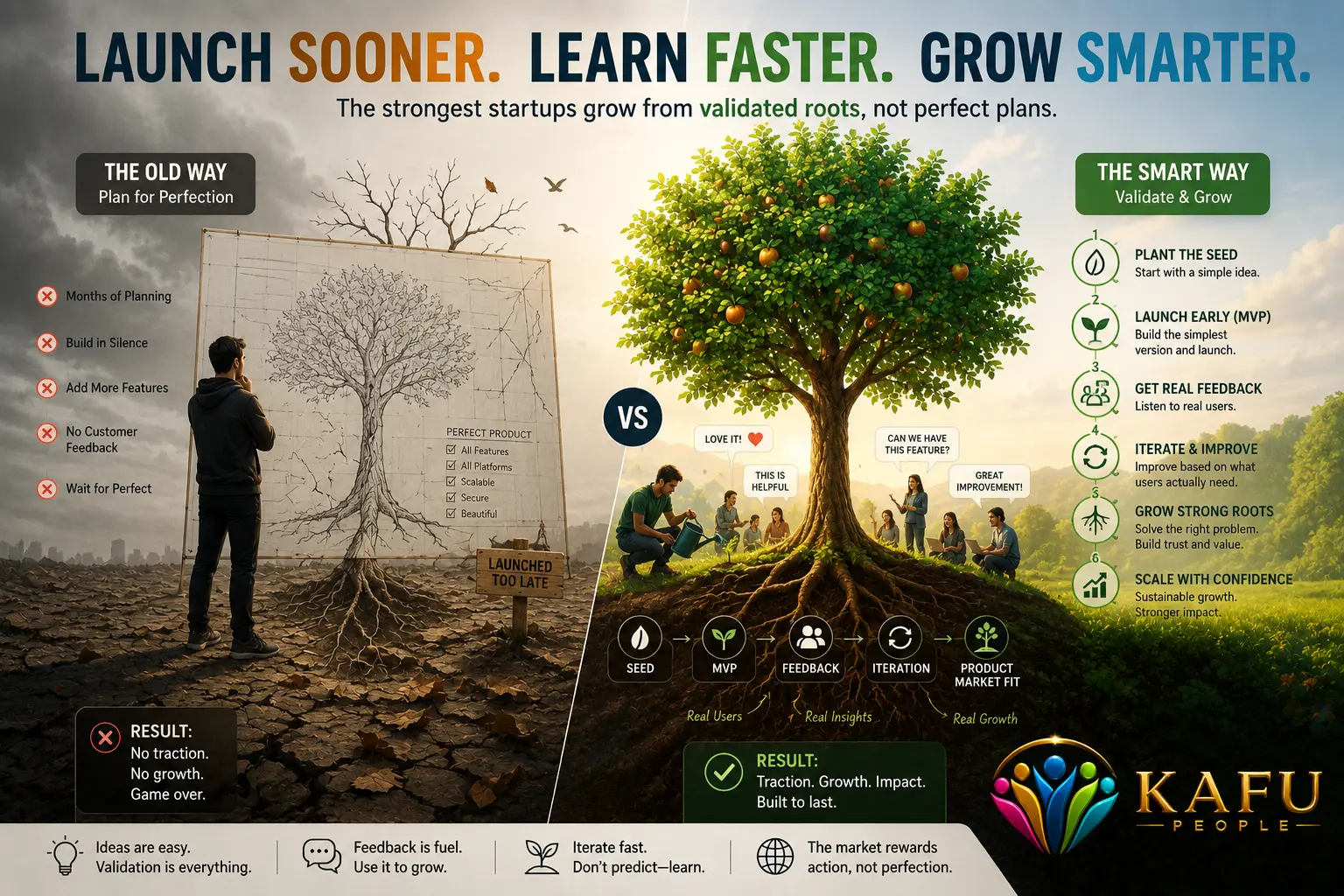
Every startup begins with an idea.
Some ideas are brilliant.
Some solve painful, real-world problems.
Some address massive markets with enormous growth potential.
Yet despite all of that, most startups still fail.
Why?
Because an idea alone has no value until it creates value for customers.
The hardest part of building a startup isn't coming up with an idea; it's turning that idea into a product people genuinely want, use, and pay for.
Many founders fall into the same trap.
They spend months planning.
They endlessly redesign features.
They add functionality that nobody asked for.
They postpone launching because they want the product to be "perfect."
But while they're busy perfecting their vision, they're missing the one thing that matters most:
Real customer feedback.
The reality is simple:
No amount of planning can replace learning from actual users.
Until real people interact with a product, every assumption is just a guess.
That's why successful startups launch early.
Not because their products are perfect.
But because they understand that speed of learning is often more important than speed of building.
Imagine spending six months developing a product, only to discover that customers don't have the problem you thought they did, or that they prefer a completely different solution.
That's not a technology failure.
It's not a marketing failure.
It's a validation failure.
The fastest-growing startups typically follow a different path:
Build the simplest version that solves the core problem.
Launch as quickly as possible.
Collect real-world feedback.
Improve continuously based on user behavior and customer needs.
They don't try to predict everything upfront.
They treat every launch as an opportunity to learn.
This mindset has become even more important today.
With AI tools, cloud infrastructure, no-code platforms, and globally distributed teams, building software has never been faster or cheaper.
The barrier to creating products is falling.
The barrier to learning quickly is becoming the real competitive advantage.
Companies that validate ideas early can adapt faster, iterate more effectively, and stay ahead of competitors who are still planning.
In the end, startups rarely fail because of a lack of ideas.
They fail because they spend too much time protecting assumptions and not enough time testing them.
The market doesn't reward perfection.
It rewards learning.
And learning comes from action.
The best startup isn't always the one with the smartest idea.
It's often the one that reaches customers first, listens carefully, and improves relentlessly.
Launch sooner. Learn faster. Grow smarter.
What's the biggest mistake you've seen early-stage startups make when building products?